Monday, 6 April 2015

Benefits of Coconut Water !

This Is What Happens To Your Body When You Drink Coconut Water

Health-Benefits-of-Coconut-Water1
Is coconut water as magical as everyone says it is?
Most of you are probably familiar with coconut oil and the numerous benefits it offers.In this article, we will look into some of the major benefits that accrue by coconut water consumption.
Many people are not aware that coconut water has virtually similar structure to the blood plasma which is present in the bloodstream in all humans. Therefore, this miraculous water made extensive use in the past war conflicts when it was frequently used as a substitute for blood plasma because it was vital for the survival of vast number of war casualties. The numerous wounded and injured people were given coconut water during terrible and prolonged battles.
Nowadays this water is used in almost all countries of the world, so it is massively popular. The coconut can be found in many markets worldwide, giving you the opportunity to have the overall health advantages of this extraordinary fruit for yourself!
Although the coconut water does not taste as deliciously as pizza, you shouldn’t look away from what is considered one of the healthiest detoxifying waters in the world.
What happens to your body when you drink coconut water?
Coconut water helps you strengthen your immune system. It kills the bacteria that cause urinary tract infections, gonorrhea, gum disease and the viruses that cause influenza, infectious diseases and typhoid. Drinking coconut water can offer a great boost of energy for those who suffer from chronic fatigue. The recommended dose is 40 to 50 ml taken daily.
While the coconut water undeniably increases energy levels, there is another very important benefit: it stimulates the production of thyroid hormones. Acting as a natural diuretic, this water is also beneficial to anyone who suffers from kidney disorders. Likewise, it benefits the urinary tract and bladder channels leaving them clean and infection-free; it eliminates toxins from the body and reduces problems caused by kidney stones.
10-Stunning-Coconut-Water-Health-Benefits5
Coconut water improves digestion too because it contains high levels of fiber. If consumed regularly, it alleviates problems caused by stomach acid. This water contains very little fat, so it can be consumed in large quantities. It gives you the feeling of satiety and reduces appetite, thus helping you to slim down and maintain an attractive silhouette!
If you suffer from acne or have a combined dry-oily skin, you can soak a cotton ball in coconut water, and apply it to the skin. It cleanses and invigorates the skin, and, unlike numerous creams and lotions, it does not close the pores. This water also finds use as a natural body purifier: when mixed with olive oil the coconut water removes intestinal parasites. Experts say that coconut water can be a valuable help to naturally solve some health problems during pregnancy as well!
One full cup of coconut water in the morning balances electrolytes whose imbalance can sometimes be the cause for hypertension, more commonly known as high blood pressure. Speaking of the mornings, we all occasionally happen to drink a bit more at late-night events, and “oddly enough” the next morning we wake up with a hangover.
So, next time you plead a headache after a razzle-dazzle party recall this miracle water which will help you get rid of the hangover. By drinking coconut water you also compensate the lost liquids and overcome the nausea that is frequently associated with hangover.
Weight loss, energy boost, strengthening of the immune system, protection from bacteria and infections… 
in a word: Good riddance to bad rubbish! What more could anyone wish from drinking a single cup of water?
One full cup of coconut water per day will also be sufficient for moisturizing your skin and keeping it shinny throughout the day. Keep in mind to drink this water after strenuous physical activities too. It’s refreshing and almost as pure as the natural spring water!

Saturday, 4 April 2015

Prophetic Medicine: What about sugar?


cane-sugar
By: Dr. John Andrew Morrow
According to a tradition, the Messenger of Allah referred to the Spring of Eternal Life as sweeter than sugar. [1] In another tradition, the Prophet is reported to have said: Eat sugar cane (qasab al-sukkar). It helps the one who is full to digest, and it fills the one who is hungry.” [2]
Sugar: A Prophetic Prescription
According to a tradition, the Messenger of Allah referred to the Spring of Eternal Life as sweeter than sugar. [1] In another tradition, the Prophet is reported to have said: Eat sugar cane (qasab al-sukkar). It helps the one who is full to digest, and it fills the one who is hungry.” [2] Imam Muhammad al-Baqir reproached one of his companions for failing to appreciate the medicinal benefits of sugar: “Woe to you, O Zarara,” said the Imam, “what makes people heedless of the excellence of lump sugar [al-sukkar al-tabarzad] when it is beneficial for seventy illnesses and it devours phlegm completely and uproots it?” [3] On one occasion, Imam al-Ṣadiq was called upon by a Companion who suffered from quartran fever. He said: “What about the blessed, the good [remedy]. Grind sugar and add it to water. Drink it on an empty stomach whenever you want a drink of water. The Companion did as he was instructed and the fever did not recur. [4]
Issues in Identification. It is the consensus that sukkar is Arabic for sugar. In Modern Standard Arabic, sugar cane is known as sakkarun. It is also known by its Classical Arabic name of qasab al-zukkar and is cultivated in Arabia. According to Akili, crystallized sugar is called tabarzad while ubluj refers to sugar-candy. [5] Sugarcane is indigenous to India and was brought to the West by Alexander the Great and his soldiers by about 325 B.C. Al-sukkar al-tabarzad is known in German as kandiszucker.
While most people in the Western world view sugar as detrimental to good health, sugar, in its natural, raw and unrefined form, is actually an excellent food rich in protein, vitamins and minerals, with a long tradition of medical applications, many of which have been confirmed by scientific studies.
Properties and Uses. While most people in the Western world view sugar as detrimental to good health, sugar, in its natural, raw and unrefined form, is actually an excellent food rich in protein, vitamins and minerals, with a long tradition of medical applications, many of which have been confirmed by scientific studies. A comparison of 100 grams of white, refined, sugar with that of whole raw sugar demonstrates the great differences in nutrition between these two products:
White SugarWhole Raw Sugar
Sucrose99.688-91
Glucose02-6
Fructose03-6
Potassium3-5600-1,000
Magnesium040-100
Calcium10-1580-110
Phosphorus0.350-100
Vitamin A0120-1,200
Vitamin B100.023-0.1
Vitamin B200.06-0.15
Vitamin B600.02-0.15
Niatin00.03-0.19
Patothenic00.34-1.18                        
The nutritional value of panela, natural brown sugar, is even higher than that of whole raw white sugar: 100 grams of panela contains 2,850 mg of mineral salts, 116 mg of phosphorus, 118 mg of calcium, 136 mg of magnesium, 1056 mg of potassium and 3 mg of iron. Panela has 5 times more minerals than brown sugar and 50 times more minerals than refined white sugar. It also contains traces of thiamine, riboflavin, niacin, manganese, chloride, copper and ascorbic and folic acid. The nutritional qualities of panela are quite exceptional and can be compared with those of honey.
The medicinal properties of sugar were first documented by the ancient Indians. In Sushruta Samhita, one of the two seminal scriptures of Ayurvedic medicine dating back 2500 years, sugar purifies the blood, prevents rheumatic afflictions, and disorders of bile, and possesses nutritive properties of high order. According to Ibn Butlan, white sugar purifies the body, is good for the chest, the kidneys, and the bladder. It causes thirst. [6] The ancient Egyptians used sugar and honey to stop bleeding from wounds, a technique equally employed by Europeans until the advent of antibiotics. [7] As Dr. Joel L. Swerdlow explains, “Sugar promotes new tissue growth by drying the bed, or bottom, of a wound, weakening the bacteria present there by dehydrating them.” [8] As a result, some surgeons have now turned to sugar to help heal deep wounds. [9]
In Ayurvedic medicine, sugar is used to strengthen the stomach, the kidneys, the heart, the eyes, the brain and the sexual organs. It is said to benefit the spleen, circulation and digestion. Sugarcane is indicated for genitor-urinary disorders such as micturition, prostrate problems, cyctitis and nepthritis. Mixed with lime juice, it is said to hasten recovery from jaundice. The juice of the sugarcane is utilized in febrile conditions. In India, like in many other parts of the world, sugarcane is used to brush and floss the teeth. Research has shown that sugar, in its natural form, prevents tooth decay.
As Dr. Joel L. Swerdlow explains, “Sugar promotes new tissue growth by drying the bed, or bottom, of a wound, weakening the bacteria present there by dehydrating them.” [8] As a result, some surgeons have now turned to sugar to help heal deep wounds. [9]
Sugarcane juice is used in Ayurvedic medicine to treat fevers, genitor-urinary disorders, jaundice, weak teeth, thinness, eyes disorders, cataract, and conjunctivitis, as well as burning of the eyes, and eye-strain after excessive reading. Panela is also reported to be an antidote, antiseptic, antivinous, bactericide, cardiotonic, demulcent, diuretic, intoxicant, laxative, pectoral, piscicide, refrigerant, and stomachic. It is a traditional remedy for arthritis, various skin problems, inflammation, cough, diarrhea, dysentery, hiccups, inflammation, laryngitis and opacity.
Scientific Studies. Studies conducted in Colombia have shown that panela can prevent wound infection in perforated appendicitis, constipation in babies, and nutritious anaemia, rickets, thrush or aphthae. Other studies have shown that panela can help heal both internal and external wounds including ulcers, as well as potentially protecting the ungs from smoke-induced lung lesions.
Antiproliferative and Antioxidant Activity
According to a study conducted by the Universidade de Sao Paulo in Brazil, a flavone from sugarcane juice showed in vitro antiproliferative activity against several human cancer cell lines. [10] In another study conducted by the Universidade de Sao Paulo, phenolic compounds from sugar cane juice showed anti-oxidant activity, indicating a potential use for beneficial health effects and/or therapeutic applications. [11]
Anti-inflammatory Activity
According to an animal study, the oral administration of a mixture of fatty acids isolated from sugar cane showed anti-inflammatory and analgesic activity, providing evidence of its potential usefulness in inflammatory disorders. [12] According to an animal study conducted by the Centro de Inmunologia Molecular in Cuba, the topical application of a mixture of fatty acids from sugar cane exerted important anti-inflammatory effects in arthritis and psoriasis without evidence of irritant effects. [13]
Immunostimulating Activity
According to an animal study conducted by the National Institute of Animal Health in Japan, chickens who were orally administered sugar cane extracts showed significantly higher antibody responses, suggesting an immunostimulating effect. [14]
In an animal study conducted by National Chung Hsing University in Taiwan, the oral administration of sugar cane extract produced an immunostimulative effect on porcine innate immunity that may provide protection against pathogens. [15]
According to an animal study conducted by the University of Tokyo, chickens who were orally administered sugar cane extract showed significantly higher body weight and gain in body weight as well as a lower food conversion rate. Oral administration of sugar cane extract also resulted in significantly higher immune responses, suggesting an immunostimulating and growth-promoting effects. [16]
Protective Activity against Endotoxic Shock
In an animal study conducted by the National Institute of Animal Health in Japan, the intraperitoneal administration of sugar cane extract before or after induced lethal shock significantly improved survival rates (92.3%) and a decrease in liver injury. These results suggest that sugar cane extract has protective effects. [17]
Protective Effect against Pseudo-Rabies
According to an animal study conducted by National Chung Hsing University in Japan, the oral administration of sugar cane extract to pigs with pseudo-rabbies virus showed a significant enhancement of natural killer cytotoxicity, lymphocyte proliferation, phagocytic function of monocytes, and interferon-gamma roduction of CD4(+) and gammadelta T cells. Sugar cane extract administration also reduced the severity of clinical signs and brain lesion in the course of disease in pigs with pseudo-rabies. Sugar cane extract treated pigs showed a 12% growth enhancement compared with untreated controls. Sugar cane extract administration had an immunostimulating effect on porcine immunity that may subsequently enhance protective activities against pseudorabies virus infection which may be extensively applied in field for the prevention of infections. [18]
Radioprotective Effect
According to an animal study conducted by the National Institute of Animal Health in Japan, the oral administration of sugar cane extract increased the survival rate of irradiated chickens to 68.8% when compared to the irradiated control (50%). [19] In another study conducted by the National Institute of Animal Health, the administration of sugar cane extract before or after irradiation enhanced both primary and secondary immune responses in chickens. [20]
Cholesterol-Lowering Effect
According to a study conducted by the Centro Nacional de Investigaciones Cientificas Cuba, policosanol, a natural mixture of higher primary aliphatic alcohols isolated and purified from sugar cane wax, possesses cholesterol lowering properties. This study indicated that while policosanol lowers LDL levels, HDL levels reamin unchanged. [21]
Hypoglycemic Activity
According to an animal study conducted by Tohoku University in Japan, a non-sucrose portion of sugar cane juice prominently diminishes blood sugar level in mice. Activity-guided fractionation of this portion yielded six glycans, saccharans A, B, C, D, E and F. These glycans exerted remarkable hypoglycemic actions in normal and alloxan-produced hyperglycemic mice. [22]
According to a controlled animal trial conducted by the Centro Nacional de Investigaciones Cientificas in Cuba, policosanol, a natural mixture of higher primary aliphatic alcohols isolated and purified from sugar cane wax, significantly reduces total cholesterol and low density lipoprotein cholesterol serum levels in a dose dependent manner. Serum triglyceride levels were significantly different between treated and control animals, but the reduction was not found to be dose-dependent, and high density lipoprotein cholesterol levels remained unchanged. [23]
According to studies conducted by the Center for Natural Products in Cuba, policosanol prevents the onset of atherosclerotic lesions, lowers cholesterol, and reduces the potential of lipoprotein to undergo lipid peroxidation, thus demonstrating promise in the management of atherosclerosis. [24] In a controlled 9 month animal trial conducted by the Center for Natural Products in Cuba, D-003, a mixture of high molecular weight aliphatic primary acids purified from sugar cane wax, significantly lowered total cholesterol, and significantly inhibited platelet aggregation. [25]
Although more than 50 studies have reported substantial reductions in plasma lipid concentrations in response to Cuban sugar cane policosanol mixtures, several animal and human trials conducted outside of Cuba, and that used non-Cuban mixtures, have failed to reproduce the efficacity of policosanols observed in earlier studies. McGill University in Canada, set out to evaluate the lipid-modulating actions of authentic Cuban sugar cane policosanols in twenty-two healthy hypercholesterolemic volunteers. In a randomized, double-blind, crossover study, no significant difference was observed between treatment and control groups in plasma total, LDL-, HDL-cholesterol, and triacylglycerol concentrations. The study showed no beneficial effects of Cuban sugar cane policosanols on lipid indicators in hypercholesterolemic persons, calling into question the clinical usefulness of policosanol mixtures as cholesterol-lowering neutraceutical agents. [26]
The Carolinas Medical Center Department of Family Medicine also examined the efficacy of sugar-cane derived policosanol in healthy adults with mild hypercholesterolemia. In an 8 week, double-blind, randomized controlled trial, no significant differences in the change in LDL cholesterol were observed between the placebo and policosanol groups. No significant changes were observed in total cholesterol, HDL cholesterol, triacylglycerol, and C-reactive protein. Researchers concluded that policosanol does not alter the serum lipid profile over an eight week period in adults with mild hypercholesterolemia. [27]
Antiosteoporosis Activity
According to an animal study conducted by the Center of Natural Products in Cuba, D-003, a sugar cane juice derivative, prevented bone loss, increased osteoblast surface, and reduced bone resorption parameters. These results suggest that D-003 could prove useful in managing osteoporosis. [28]

[1] Ibn Qayyim al-Jawziyyah M. al-Tibb al-nabawi. Bayrut: Dar al-Kitab al-‘Arabi, 1985.
[2] Azraqi I. Tashil al-manafi’ fi al-tibb wa al-hikmah. al-Qahirah: Muhammad ‘Ali Sabih, 1963:18.
[3] Nisaburi A. Islamic Medical Wisdom: The Tibb al-a’immah. Trans. B Ispahany. Ed. AJ Newman. London: Muḥammadi Trust, 1991:80.
[4] Nisaburi A. Islamic Medical Wisdom: The Tibb al-a’immah. Trans. B Ispahany. Ed. AJ Newman. London: Muḥammadi Trust, 1991:58.
[5] Ibn al-Qayyim al-Jawziyyah. Natural Healing with the Medicine of the Prophet. Pearl Publishing. Trans. M al-Akili. Philadelphia, 1993.
[6] Ibn Butlan, The Medieval Health Handbook: Tacuinum sanitatis. Ed. L Cogliati Arano. Trans. O Ratti and A Westbrook New York: George Braziller, 1976: XLVIII.
[7] Swerdlow JL. Nature’s Medicine: Plants that Heal. Washington: National Geographic, 2000:61.
[8] Swerdlow JL. Nature’s Medicine: Plants that Heal. Washington: National Geographic, 2000:61.
[9] Swerdlow JL. Nature’s Medicine: Plants that Heal. Washington: National Geographic, 2000:61.
[10] Duarte-Almeida JM, Negri G, Salatino A, de Carvalho JE, Lajolo FM. Antiproliferative and antioxidant activities of a tricin acylated glycoside from sugarcane (Saccharum officinarum) juice. Phytochemistry.2007;68(8):1165-1171.
[11] Mauricio Duarte-Almeida J, Novoa AV, Linares AF, Lajolo FM, Ines Genovese M. Antioxidant activity of phenolics compounds from sugar cane (Saccharum officinarum L.) juice. Plant Foods Hum Nutr.2006;61(4):187-192.
[12] Ledon N, Casaco A, Rodriguez V, Cruz J, Gonzalez R, Tolon Z, Cano M, Rojas E. Anti-inflammatory and analgesic effects of a mixture of fatty acids isolated and purified from sugar cane wax oil. Planta Med.2003;69(4):367-369.
[13] Ledon N, Casaco A, Remirez D, Gonzalez A, Cruz J, Gonzalez R, Capote A, Tolon Z, Rojas E, Rodriguez VJ, Merino N, Rodriguez S, Ancheta O, Cano MC. Effects of a mixture of fatty acids from sugar cane (Saccharum officinarum L.) wax oil in two models of inflammation: Zymosan-induced arthritis and mice tail test of psoriasis.Phytomedicine. 2007.
[14] Hikosaka K, El-Abasy M, Koyama Y, Motobu M, Koge K, Isobe T, Kang CB, Hayashidani H, Onodera T, Wang PC, Matsumura M, Hirota Y. Immunostimulating effects of the polyphenol-rich fraction of sugar cane (Saccharum officinarum L.) extract in chickens. Phytother Res. 2007;21(2):120-125.
[15] Lo DY, Chen TH, Chien MS, Koge K, Hosono A, Kaminogawa S, Lee WC. Effects of sugar cane extract on the modulation of immunity in pigs. J Vet Med Sci. 2005;67(6):591-597.
[16] El-Abasy M, Motobu M, Shimura K, Na KJ, Kang CB, Koge K, Onodera T, Hirota Y. Immunostimulating and growth-promoting effects of sugar cane extract (SCE) in chickens. J Vet Med Sci. 2002;64(11):1061-1063.
[17] Motobu M, Amer S, Koyama Y, Hikosaka K, Sameshima T, Yamada M, Nakamura K, Koge K, Kang CB, Hayasidani H, Hirota Y. Protective effects of sugar cane extract on endotoxic shock in mice. Phytother Res.2006;20(5):359-363.
[18] Lo DY, Chien MS, Yeh KS, Koge K, Lin CC, Hsuan SL, Lee WC. Effects of sugar cane extract on pseudorabies virus challenge of pigs. J Vet Med Sci. 2006;68(3):219-225.
[19] Amer S, Na KJ, Motobu M, El-Abasy M, Nakamura K, Koge K, Hirota Y. Radioprotective effect of sugar cane extract in chickens. Phytother Res. 2005;19(6):496-500.
[20] Amer S, Na KJ, El-Abasy M, Motobu M, Koyama Y, Koge K, Hirota Y. Immunostimulating effects of sugar cane extract on X-ray radiation induced immunosuppression in the chicken. Int Immunopharmacol.2004;4(1):71-77.
[21] Arruzazabala ML, Carbajal D, Mas R, Molina V, Valdes S, Laguna A. Cholesterol-lowering effects of policosanol in rabbits. Biol Res. 1994;27(3-4):205-208.
[22] Takahashi M, Konno C, Hikino H. Isolation and Hypoglycemic Activity of Saccharans A, B, C, D, E and F, Glycans of Saccharum officinarum Stalks1. Planta Med. 1985;51(3):258-260.
[23] Arruzazabala ML, Carbajal D, Mas R, Molina V, Valdes S, Laguna A. Cholesterol-lowering effects of policosanol in rabbits. Biol Res. 1994;27(3-4):205-208.
[24] Menendez R, Fraga V, Amor AM, Gonzalez RM, Mas R. Oral administration of policosanol inhibits in vitro copper ion-induced rat lipoprotein peroxidation. Physiol Behav. 1999;67(1):1-7.
[25] Gamez R, Mas R, Noa M, Menendez R, Garcia H, Gonzalez J, Perez Y, Goicochea E. Effects of chronic administration of D-003, a mixture of sugar cane wax high molecular acids, in beagle dogs. Drugs Exp Clin Res.2004;30(2):75-88.
[26] Kassis AN, Jones PJ. Lack of cholesterol-lowering efficacy of Cuban sugar cane policosanols in hypercholesterolemic persons. Am J Clin Nutr. 2006;84(5):1003-1008.
[27] Dulin MF, Hatcher LF, Sasser HC, Barringer TA. Policosanol is ineffective in the treatment of hypercholesterolemia: a randomized controlled trial. Am J Clin Nutr. 2006;84(6):1543-1548.
[28] Noa M, Mendoza S, Mas R, Mendoza N, Leon F. Effect of D-003, a mixture of very high molecular weight aliphatic acids, on prednisolone-induced osteoporosis in Sprague-Dawley rats. Drugs R D.2004;5(5):281-290.

by Dr. John Andrew Morrow
Source: lastprophet.info 

Friday, 3 April 2015

The World Is Getting More Religious: Islam Growing Fastest Religion in The World


Muslims and Christians are expected make up nearly equal shares of the global population by 2050 for the first time. 


Atheists, agnostics and other people who don’t affiliate with a religion will make up a smaller fraction of the world’s population in 2050, according to a new study.
The Pew Research Center study released Thursday found that the growth of major religious groups will outpace the rise in the unaffiliated population despite trends in the United States and other Western countries, where the proportion of religiously unaffiliated people is expected to grow. By 2050, the total global population is expected to rise to 9.3 billion from 6.9 billion today.
Islam will expand faster than any other major religion, according to the report, with Muslims and Christians expected make up nearly equal shares of the global population by 2050 for the first time. While much of the Muslim and Christian population growth is expected to occur in Sub-Saharan Africa, the share of Muslims in Europe and the U.S. is also expected to grow.
In Europe, for example, Muslims will make up 10% of the total population. In the U.S., they will make up 2.1%, up from 0.9%, and outnumbering the Jewish population in America.
Among all major religions, Buddhism is the only one that is not expected to expand by 2050, due largely to low fertility rates in countries like China and Japan. Here’s a breakdown of religious growth around the world from the Pew Research Center:
Source: The World Is Getting More Religious by Time News

Thursday, 2 April 2015

24 of the Most Influential Black Muslims in History

24 of the Most Influential Black Muslims in History

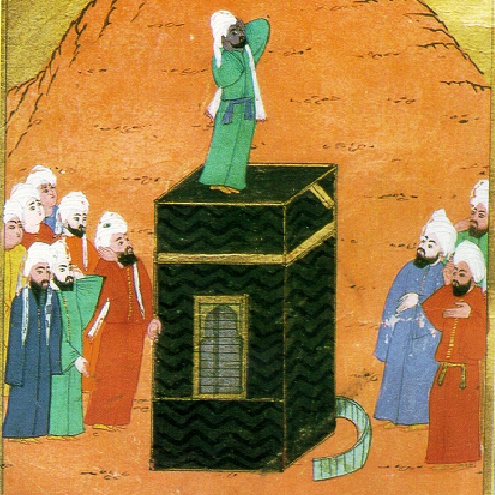
Bilal ibn Ribah pictured, atop the Kaaba
Bilal ibn Rabah (580–640 A.D.)
Bilal was a formerly enslaved Ethiopian who became one of the closest and most-trusted companions of the Prophet Muhammad. Known for his beautiful voice, Bilal became the first muezzin (caller to prayer) in Islam, chosen by Muhammad himself.
Umm Ayman aka Barakah
Umm Ayman (d. 650)
Umm Ayman, also known as Barakah, was an enslaved Ethiopian who was emancipated and became a renowned companion of the Prophet Muhammad. She was one of the few individuals who closely knew the Prophet from his birth until his death. Among the earliest converts to Islam, she participated in the battle of Uhud, caring and tending for the wounded.
Usama b. Zayd
Ubada ibn as-Samit (d. 654)
An early companion of the Prophet Muhammad, Ubada was one of the earliest converts to Islam in Medina and participated in all the major battles of the Prophet, including Badr and Uhud. Later, he became a successful commander of the Rashidun army and served under the Rashidun caliphs Abu Bakr and Umar. He was one of the main field commanders during the Muslim conquest of Egypt.
Usama bin Zayd
Usama bin Zayd (d. 674)
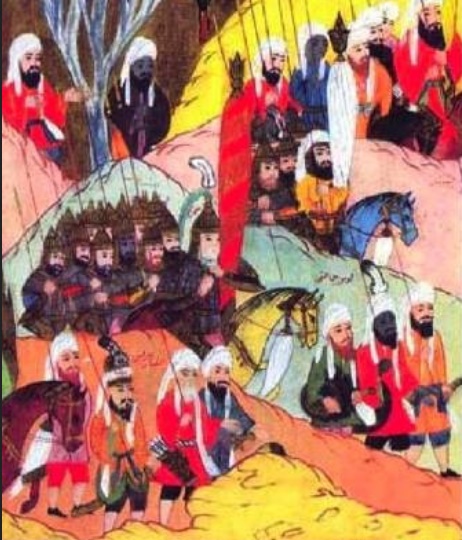
The son of Zayd ibn al-Hāritha and Umm Ayman, Usama bin Zayd was among the closest companions of the Prophet Muhammad and was the youngest individual ever appointed as a military general during the lifetime of the Prophet, leading a military force when he was only 17 years old.
muslim warriors 2
Muhammad al-Jawad (c. April 12, 811 A.D. – Nov. 29, 835 A.D.)
Considered the ninth Imam by the Twelver Shi’i tradition, Muhammad al-Jawad was a descendant of the Prophet and one of the most important Alid figures during his time. Muhammad al-Jawad undertook the responsibility of the Imamate while only 8 years old. His mother, al-Khayzaran (also known as Sabika), was of Nubian or East African origin.
Hieroglyphs from Tomb of Ramses 6 in the Valley of the Kings - Luxor-Egypt
Dhu’l-Nun al-Misri (796 – 859)
One of the most prominent early mystics in the Islamic world, Dhu’l-Nun originated from Nubia and was a legendary alchemist and thaumaturge. He is supposed to have known the secret of the Egyptian hieroglyphs. His teachings emphasized the central role of knowledge (gnosis or ma‘rifa) in attaining higher spiritual realization in Sufism. 
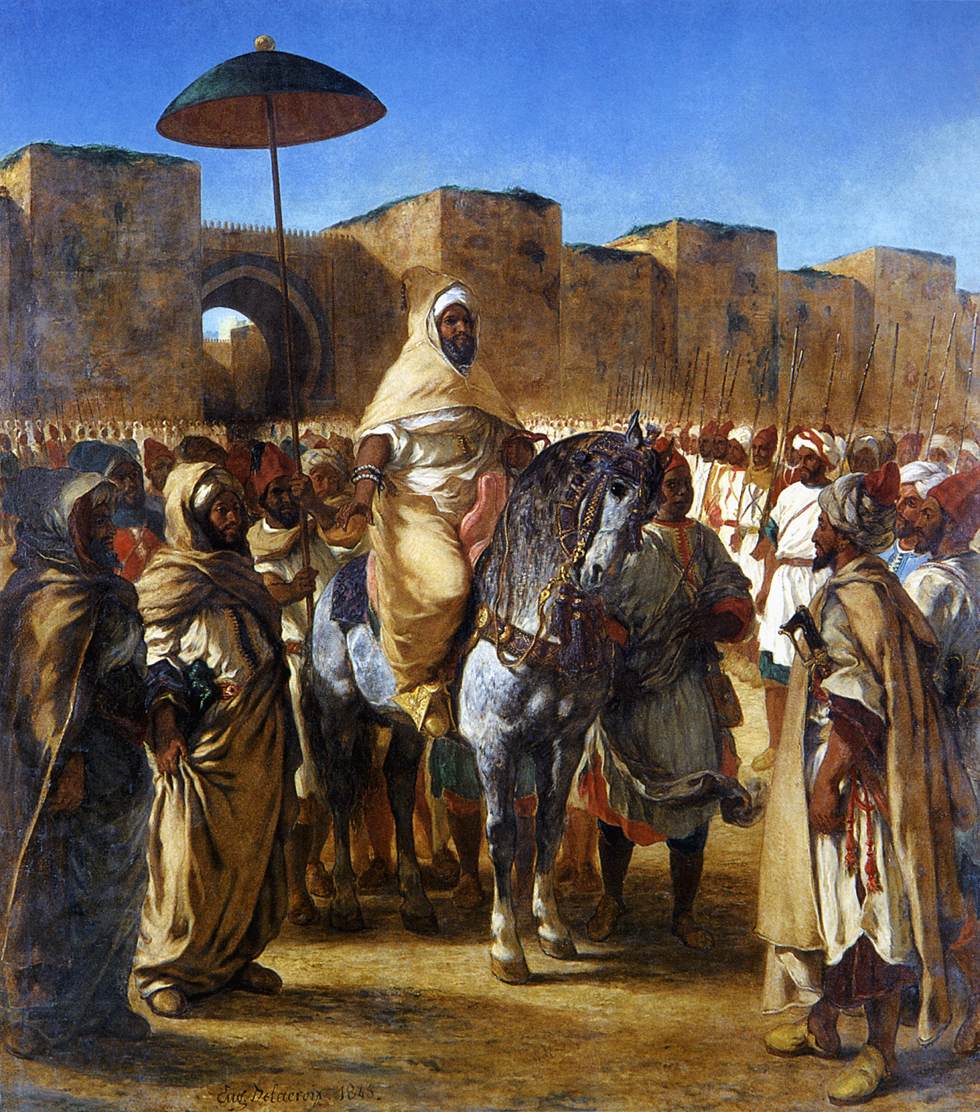
Moors in Spain
Tariq ibn Ziyad (d. 720)
Tariq ibn Ziyad was a Muslim general who led the Islamic conquest of what is now Spain and Portugal in 711–718 A.D. Under the orders of the Umayyad Caliph Al-Walid I, he led a large army from the north coast of Morocco, consolidating his troops at a large hill now known as Gibraltar. The name “Gibraltar” is the Spanish derivation of the Arabic name Jabal Ṭariq, meaning “mountain of Tariq,” which is named after him.
“The First Islamic Zoologist”al-Jāḥiẓ (781 – 869)
Originally from Basra, Abu Uthman Amr, aka al-Jāḥiẓ, is renowned as one of the most important writers in Islamic history. In addition, he was an accomplished theologian, poet, philosopher, grammarian and linguist. Known as “the first Islamic zoologist,” he authored about 200 books on various subjects. Among his most famous works is his Risalat mufakharat al-sudan ‘ala al-bidan (Treatise on Blacks), an impassioned defense of the superior qualities and accomplishments of the people of sub-Saharan and East Africa.
ikhshidid_dynasty_935_-_969
Abū al-Misk Kafūr (905–968)
With beginnings as an enslaved Ethiopian, Kafūr rose to become a military commander and eventually sultan of the Ikhshidid dynasty, which included territory encompassing modern-day Egypt, Sudan, Libya, Eritrea, Palestine, Syria, Lebanon, Turkey, Cyprus, Iraq, Jordan and the Hejaz. 
Abdallah Ibn Yasin
Abdallah Ibn Yasin (d. July 7, 1059) 
Abdallah Ibn Yasin was a jurist, theologian, reformist and founder of the Almoravid movement and dynasty. He played a central role in the Islamization of the Berber tribes of West Africa.
Gold coin of Calif al-Mustansir, Misr,
Al-Mustanṣir bi-llāh (July 5, 1029 – Jan. 10, 1094)
Fatimid Isma’ili Imam-Caliph. He was born to a Sudanese mother and his caliphate lasted for about 60 years, the longest of any caliph in the Islamic world.
mansa musa
Mansa Musa (c. 1280 – c. 1337)
Mansa Musa was emperor of the Malian Empire in West Africa and was famously known for his wealth, patronage of Islamic scholars and magnificent architectural projects. His reign is remembered as one of the most prosperous of any monarch in the history of the world.
Sonni-Ali-BerSonni Ali (d. 1492)
Sonni Ali, also known as Sunni Ali Ber or “Sunni Ali,” was a military strategist, conqueror and founder of the Songhai Empire in West Africa. Under Sonni Ali’s infantry and cavalry, many cities were captured and then fortified, such as Timbuktu and Djenné. During his reign, Songhai surpassed the height of the Mali Empire, engulfing areas under the Mali Empire and the Ghana Empire before it.
Askia Muhammad I
Askia Muhammad I (c. 1443 – 1538)
Askia Muhammad, also known as Askia the Great, was an emperor, military commander and political reformer of the Songhai Empire. Under Askia Muhammad, the Songhai empire became the largest ever in West Africa and one of the largest empires in Islamic history.
Estevanico
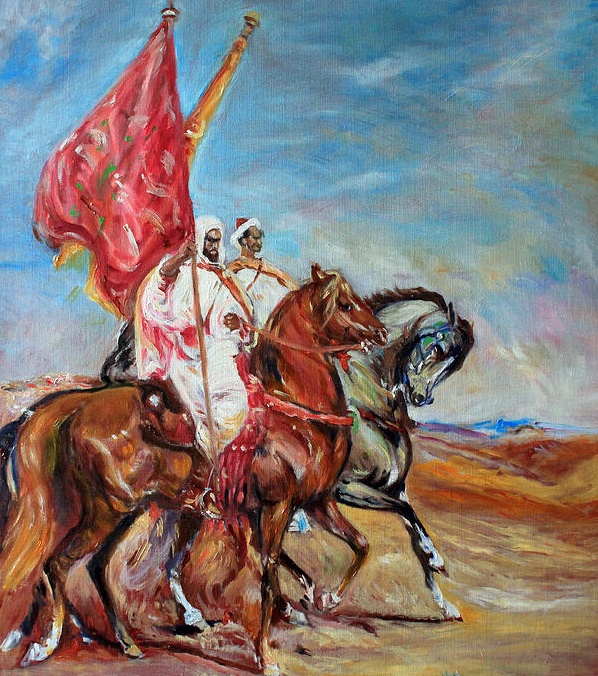
Mustafa Zemmouri/Estevanico (c. 1500–1539)
Mustafa Zemmouri, also known as Estevanico or Esteban de Dorantes, was enslaved by the Portuguese and later the Spanish in his home in Morocco. Estevanico took part in Spanish exploration expeditions in regions corresponding to modern-day Cuba, Mexico, Florida, New Mexico, Arizona and Texas. As such, he is considered to be the first African-born individual to have set foot in continental North America.
Idris Alawma Alooma, Alauma
Idris Alawma (1580–1617)
Idris Alawma was an administrator, military leader and ruler of the Bornu-Kamen Empire in what is today part of Chad and Nigeria. Following the fall of the Songhai Empire, he became the most powerful Muslim monarch between the Niger and the Nile.
Shehu Usman dan Fodio
Shehu Usman dan Fodio (1754–1817)
Shehu Usman dan Fodio was a Fulani religious teacher, writer and Islamic promoter and the founder of the Sokoto Caliphate in the Hausa States in what is today northern Nigeria. He wrote more than 100 books concerning religion, government, culture and society. He also encouraged literacy and scholarship, for women as well as men, and several of his daughters emerged as scholars and writers.
Ibrahim Abd al-Rahman
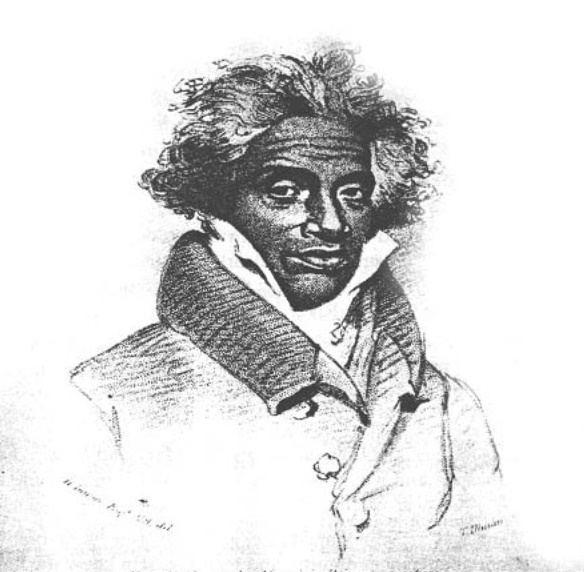
Ibrahim Abd al-Rahman (1762 – 1829)
Ibrahim Abd al-Rahman was born a prince in present-day Guinea, West Africa, and trained in the Islamic sciences, studying in the famous scholarly center of Timbuktu, Ibrahim was enslaved in his 20s by the British and ended up in New Orleans in the Americas. After working to obtain his freedom from slavery for 40 years, he was released by the order of U.S. President John Quincy Adams after the Sultan of Morocco –Mulay Abd al-Rahman ibn Hisham – had requested his release. He returned to Africa and died there.
Nana Asma’u
Nana Asma’u (1793–1864)
In addition to being the daughter of the great Usmān dan Fodīo, she was an important poet, writer, historian, educator and religious scholar in her own right. As an ardent advocate of the participation of women in society and as a result of her broad-based campaign to empower and educate women, she was one of the most influential women in West Africa in the 19th century.
Muhammad Ahmad bin Abd Allah
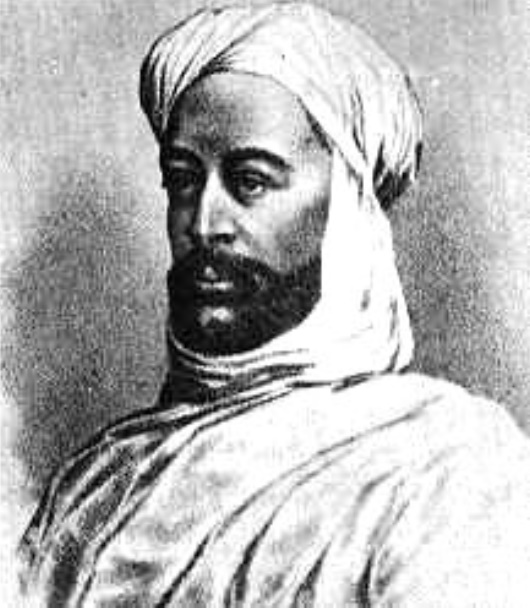
Muhammad Ahmad bin Abd Allah (Aug. 12, 1844 – June 22, 1885)
Muhammad Ahmad was a Sudanese reformist, mystic, revolutionary and anti-colonial leader who led a major rebellion against the Turco-Egyptian and British forces in Sudan and managed to establish a large state in most of the country. The success of his rebellion made him one of the most renowned anti-colonial leaders of the 19th century.
Elijah Muhammad
Elijah Muhammad (Oct. 7, 1897 – Feb. 25, 1975)
Elijah Muhammad was an African-American religious leader who led the Nation of Islam (NOI) from 1934 until his death in 1975. Working to achieve the NOI goal of improving the spiritual, mental, social and economic condition of African-Americans in the United States, Muhammad’s impact is still felt today.
malcolm x
Malcolm X (1925–1965)
Malcolm X, also known as El-Hajj Malik El-Shabazz, was an African-American Muslim revolutionary, public speaker and civil rights activist. As a prominent figure in the Nation of Islam, Malcolm X articulated concepts of race pride and Black nationalism in the 1950s and ’60s and continues to exercise a huge influence on Black people until this day.
Minister-Louis-Farrakhan
Louis Farrakhan Muhammad Sr. (b. May 11, 1933)
He is a religious and social leader and currently heads up the NOI. He’s known for his outspoken and articulate rhetorical style, reviving the NOI in the 1980s, and organizing and leading the Million Man March in October 1995 in Washington, D.C., calling on Black men to renew their commitments to their families and communities.
New Black Panther Party leader Khalid Abdul Muhammad observe
Khalid Abdul Muhammad (Jan. 12, 1948 – Feb. 17, 2001)
Khalid Muhammad was an outspoken African-American activist who came to prominence as the national assistant to Louis Farrakhan of the Nation of Islam (NOI). Despite the controversy that followed him, his strong denunciations of white power and his calls for Black self-empowerment gained him the support of many in the Black community.

Friday, 27 March 2015

A Hundred Million Stars in 3 Minutes


In January 2015, NASA released the largest image ever of the Andromeda galaxy, taken by the Hubble telescope. Totaling 1.5 billion pixels and requiring 4.3 gigabytes of disk space, this photo provides a detailed glimpse at the sheer scale of our nearest galactic neighbor. By zooming into the incredible shot, filmmaker Dave Achtemichuk creates an unforgettable interactive experience.

The Short Film Showcase spotlights exceptional short videos created by filmmakers from around the web and selected by National Geographic editors. We look for work that affirms National Geographic's mission of inspiring people to care about the planet. The filmmakers created the content presented, and the opinions expressed are their own, not those of the National Geographic Society.

Know of a great short film that should be part of our Showcase? Email SFS@ngs.org to submit a video for consideration.

See the video: Video of Star World (DMMAH)

Tuesday, 24 March 2015

How an ancient Muslim scientist cast his light into the 21st century

Celebrating optics pioneer Ibn al-Haytham — and promoting intercultural collaboration for the International Year of Light

Creative illustration depicting Ibn al-Haytham experimenting in Cairo to prove that we see because light from objects travels in a straight line into our eyes (Source: 1001 Inventions: The Enduring Legacy of Muslim Civilization © 1001 Inventions)Creative illustration depicting Ibn al-Haytham experimenting in Cairo to prove that we see because light from objects travels in a straight line into our eyes (Source: 1001 Inventions: The Enduring Legacy of Muslim Civilization © 1001 Inventions)
To explore the nature of light and vision, 11th-century physicist Ibn al-Haytham used a dark chamber he called “Albeit Almuzlim,” translated into Latin as “camera obscura” – the device that forms the basis of photography. He observed that light coming through a tiny hole travelled in straight lines and projected an image onto the opposite wall.
Based on such experimentation, Ibn al-Haytham concluded that vision is accomplished by rays coming from external luminous sources and entering the eye, rather than through rays emitted from the eye as was commonly believed.
This was just one of the ways this pioneer of optical sciences, who lived during the Golden Age of Muslim Civilisation, would cast light into our modern world.
Our knowledge of science today is built upon thousands of years of work accumulated throughout ancient civilizations. The historical “collective learning” by people of different languages, faiths and cultures has laid the foundation for modern science. In today’s tension-ridden world, insights from our past can highlight how civilisations have been historically interdependent, providing inspiration to further promote harmony between cultures.
Photograph of a creative representation bust of Ibn al-Haytham made by artist Ali Amro for 1001 Inventions to celebrate the UNESCO International Year of Light 2015 (© 1001 Inventions)Photograph of a creative representation bust of Ibn al-Haytham made by artist Ali Amro for 1001 Inventions to celebrate the UNESCO International Year of Light 2015 (© 1001 Inventions)
This is especially important in the 21st century, where challenges are not confined to a single nation or region. As we aim to address global challenges, we realise they necessitate collective solutions. Science plays a pivotal role in improving living conditions and catering to social needs, from food security and health to energy sufficiency, supporting the path towards sustainable development.
For the International Year of Light and Light-Based Technologies (IYL2015), UNESCO has been celebrating the achievements of pioneering scientists through the ages, including Ibn al-Haytham, who made lasting contributions to the understanding of vision, optics and light. With light being a subject that unifies humanity, following the development of vision and light theories through Ibn al-Haytham’s contributions offers a highly relevant narrative to the process of historical collective learning. The legacy of the remarkable polymath demonstrates how knowledge was developed through the ages and across civilisations.
Al-Hasan Ibn al-Haytham (known in the West by the Latinised form of his first name, initially “Alhacen” and later “Alhazen”) was born about 1,000 years ago in Basra, which is now in Iraq. This was the height of the Golden Age of Muslim Civilisation — a creative era that spanned a thousand years from the 7th century onwards, from Spain to China, bringing forth many far-reaching advances in science, technology and medicine by men and women of different faiths and cultures. Building upon knowledge of ancient civilisations, their contributions added significant and crucial value to the accumulation of scientific knowledge shaping our homes, schools, hospitals, towns and the way we trade, travel and understand the universe today.
Ibn al-Haytham was “the greatest Muslim physicist and one of the greatest students of optics of all times,” in the words of the renowned historian of science, the late George Sarton, in his Introduction to the History of Science.

Making his mark in the shadow of Aristotle, Euclid, Al-Kindi, Banu Musa, Ibrahim ibn Sinan …

An image of Ibn al-Haytham appears on Iraqi 10 dinar bills.  An image of Ibn al-Haytham appears on Iraqi 10 dinar bills.
Ibn al-Haytham was born after centuries of intense activity in mathematics, astronomy, optics, and other physical sciences by pioneers such as Aristotle, Euclid, Ptolemy, Al-Kindi, Banu Musa, Thabit ibn Qurra, Ibrahim ibn Sinan, Al-Quhi and Ibn Sahl. He greatly benefited from being able to use the direct translation of many scientific works from Greek, Syriac and Persian thinkers, who in their turn were the heirs to the great scientific traditions of Ancient Egypt, Babylonia, India and China.
Ibn al-Haytham based his theories on the work of the Greek physician Galen, who had provided a detailed description of the eye and the optic pathways. However, Ibn al-Haytham subscribed to a method of empirical analysis to accompany theoretical postulates that is similar in certain ways to the scientific method we know today. Realizing that the senses were prone to error, he devised methods of verification, testing and experimentation to uncover the truth of the natural phenomena he examined. Up until this time, the study of physical phenomena had been an abstract activity with occasional experiments. In his 7-volume Book of Optics, Ibn al-Haytham wrote:
If learning the truth is the scientist’s goal … then he must make himself the enemy of all that he reads.
Ibn al-Haytham's sketch of the human optical system. The oldest known drawing of the nervous system from Kitab al-Manazir of Ibn al-Haytham (from a manuscript held in the Süleymaniye Library, Istanbul), in which the eyes and optic nerves are illustrated. It shows a large nose at the bottom, eyes on both side and a hollow optic nerve that flows out of each one towards the back of the brain. (Source: <a href="http://www.muslimheritage.com/article/reflections-optics-time">Reflections on the Optics of Time</a>  © Muslim Heritage)Ibn al-Haytham's sketch of the human optical system. The oldest known drawing of the nervous system from Kitab al-Manazir of Ibn al-Haytham (from a manuscript held in the Süleymaniye Library, Istanbul), in which the eyes and optic nerves are illustrated. It shows a large nose at the bottom, eyes on both side and a hollow optic nerve that flows out of each one towards the back of the brain. (Source: Reflections on the Optics of Time© Muslim Heritage)
Ultimately, he was equally recognized for his approach to experimentation as for his discoveries.
“Ibn al-Haytham was one of the truly great men of science,” wrote historian of science Professor Glen M. Cooper of Claremont McKenna College in California. “It is both through his clever use of thought experiments and in his emphasis on performing actual and careful experiments that Ibn al-Haytham must be considered as one of a handful of scientists whose contributions were pivotal to the development of the modern world.” 
Indeed, Ibn al-Haytham’s discoveries in optics and vision overturned long periods of misunderstanding. Dr. George Saliba, Professor of Arabic Science at the Department of Middle East and Asian Languages and Cultures at Columbia University, said:
Ibn al-Haytham is universally acknowledged to be one of, if not, the most creative scientist Islamic civilization had ever known. He did not only critique the inherited Greek theories of light and vision, in his Book On Optics, and managed to create his own experimentally tested theories to replace them, thereby ushering the first building blocks for the modern understanding of how human vision takes place, but also subjected Greek cosmological doctrines in his other book, Doubts Against Ptolemy, to a most devastating criticism that managed to undermine the very foundations of those doctrines, thereby initiating a sustained program of research to replace them; a program that lasted for centuries after him and culminated with the ultimate overthrow of the Aristotelian universe and the birth of the modern astronomy of the European Renaissance.

Why his influence lingers

 The Polish astronomer Johannes Hevelius chose to honor Ibn al-Haytham, alongside Galileo, in his most famous work on the Moon, <em>Selenographia</em>, published in 1647. Image is from his book's title page (Source: Houghton Library, Harvard University)The Polish astronomer Johannes Hevelius chose to honor Ibn al-Haytham, alongside Galileo, in his most famous work on the Moon,Selenographia, published in 1647. Image is from his book's title page (Source: Houghton Library, Harvard University)
Today, the oldest-known drawing of the nervous system is from Ibn al-Haytham's Book of Optics, in which the eyes and optic nerves are illustrated. When Ibn al-Haytham's Book of Optics(Kitab al-Manazir) was translated into Latin (De Aspectibus), its impact rippled out across the whole world. Both his optical discoveries, and the fact that they had been validated using hands-on experiments, would influence those who came after him for centuries.
So how did that influence shine its light on subsequent generations? In the early 12th century, the Spanish town of Toledo was the focus of a huge effort to translate Arabic books into Latin. Christian, Jewish and Muslim scholars flocked there, where they lived alongside one another and worked together to translate the old knowledge into Latin and then into other European languages. Ibn al-Haytham's Book of Optics as well as some of his other scientific works were translated into Latin. Having his work available in Latin proved influential on scholars writing during the Middle Ages and Renaissance, including Roger Bacon, Johannes Kepler and even Leonardo da Vinci, thus significantly contributing to the intellectual legacy that Latin scholars derived from Muslim civilization.
Professor A. Mark Smith of the University of Missouri, who specialises in Medieval history and the history of science, described the significance of Ibn al-Haytham's contributions:
Ibn al-Haytham’s primary contribution to the development of modern optics was the creation of a brilliant optical synthesis from various earlier theories, as well as his own. So elegant, coherent, and logically compelling was that synthesis, in fact, that it informed optical thought in Europe for hundreds of years before it was finally undermined by Kepler. The very fact that it persisted for so long and that it finally took a thinker of Kepler’s exceptional acuity to offer a viable alternative in the theory of retinal imaging is a testament to its elegance and logical power.
Ibn al-Haytham’s seminal work on optics and light is evidence of  the accumulation of scientific knowledge which built on the contributions of different civilisations, helping to this day shape our understanding of the universe and impacting our day-to-day lives. 

A global educational campaign

Ahmed Salim, 1001 Inventions Managing Director, with Prof. Maciej Nalecz, Director of UNESCO's Division of Science Policy & Capacity Building, after unveiling the statue of Ibn al-Haytham at the International Year of Light Opening Ceremony at UNESCO headquarters in Paris. Ahmed Salim, 1001 Inventions Managing Director, with Prof. Maciej Nalecz, Director of UNESCO's Division of Science Policy & Capacity Building, after unveiling the statue of Ibn al-Haytham at the International Year of Light Opening Ceremony at UNESCO headquarters in Paris.

In today’s information age, distance and language are no longer barriers to the transfer of knowledge. Collective learning no longer requires time spans of thousands of years. With the power of technology and advancements in science, collaboration across cultures could bring massive leaps and rapid advances towards solving shared global challenges and achieving mutual benefits, while also contributing to intercultural understanding.
At a time of mounting political pressures, it is imperative to create platforms for collaboration and an environment conducive to partnerships enabling scientists, across borders, to find common solutions for global challenges.  
Creative illustration and poster for the global campaign "1001 Inventions and the World of Ibn Al-Haytham" (Source: 1001inventions.com © 1001 Inventions)Creative illustration and poster for the global campaign "1001 Inventions and the World of Ibn Al-Haytham" (Source: 1001inventions.com © 1001 Inventions)
Inspired by Ibn al-Haytham, 1001 Inventions launched a global educational campaign produced with the King Abdulaziz Center for World Culture in Saudi Arabia and in partnership withUNESCO and the International Year of Light. Titled “1001 Inventions and the World of Ibn Al-Haytham,” the initiative uses the scientist’s extraordinary life to raise awareness of the importance of intercultural dialogue through science diplomacy. It also aims to further instill pride in science heritage, promote social cohesion and encourage mutual understanding and respect through engaging under-represented communities.
What is most important about the campaign is that it aims to inspire young people to study science, technology, engineering and math (STEM) and pursue careers in science. While it celebrates stories from the past, the initiative is highly relevant to our world today. In a world where science is crucial to our wellbeing, harnessing the potential of young people and building their scientific capacity is an indisputable necessity. 
The campaigns of 1001 Inventions and other informal science education initiatives can be considered tools of science diplomacy, building bridges between scientists, academics and societies at large. These initiatives are of utmost importance as they contribute to finding collective solutions for shared challenges, while also resolving political, economic and social tensions. A new generation equipped with a mindset of intercultural collaboration and empowered by tools to become science and technology leaders provides a unique opportunity to build our future constructively.
A giant fully functioning 360-degree camera obscura created by 1001 Inventions as a tribute to Ibn al-Haytham. The interactive exhibit offers audiences the chance to step inside the mind and world of Ibn al-Haytham and experience how we see and learn about the fundamentals of light science. (Photo courtesy of 1001 Inventions)A giant fully functioning 360-degree camera obscura created by 1001 Inventions as a tribute to Ibn al-Haytham. The interactive exhibit offers audiences the chance to step inside the mind and world of Ibn al-Haytham and experience how we see and learn about the fundamentals of light science. (Photo courtesy of 1001 Inventions)

1001 Inventions

With its motto of “Discovering the Past, Inspiring a Better Future,”1001 Inventions is an award-winning international science and cultural heritage organization based in the UK.
International Year of Light logoA nonprofit organization, 1001 Inventions has uncovered a thousand years of scientific and cultural achievements from Muslim Civilization from the 7th century onwards, showing how these contributions helped create the foundations of our modern world. Through its educational programs, books, exhibitions, live shows, films and learning products, 1001 Inventions showcases the contributions of inspirational men and women of different faiths and cultures in a civilization that spread from Spain to China.

International Year of Light

Fuelled by UNESCO and a large consortium of scientific bodies, the International Year of Light and Light-Based Technologies (#IYL2015) brings together many different members of the scientific community. This global initiative aims to raise awareness about how light-based technologies promote sustainable development and provide solutions to global challenges in energy, education, agriculture and health. Its goal is to highlight the importance of light and optical technologies in our lives and for the development of society.